 Skip to main content


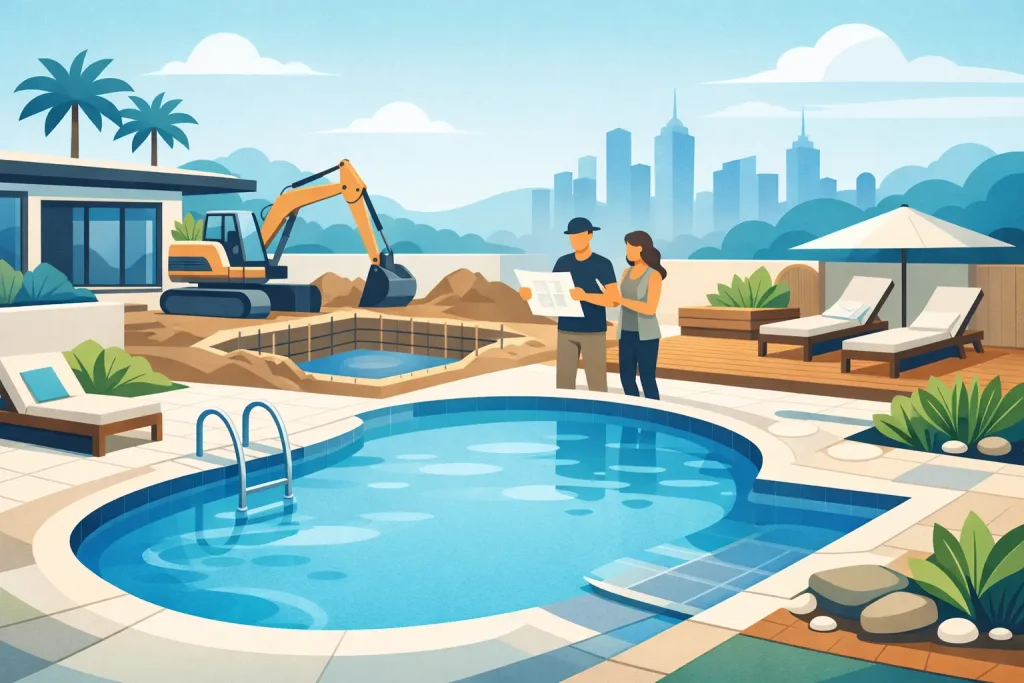
A pool can look simple on paper – a rectangle, a set of steps, a strip of paving – but the right build is rarely simple. In Melbourne, site access, soil conditions, council requirements, engineering needs and how you want to use the space all shape the outcome. That is why a custom pool building guide matters. It helps you make better decisions early, before design ideas turn into costly changes on site.
For many homeowners, the biggest mistake is assuming every pool is built the same way. It is not. A compact plunge pool on a narrow inner-suburban block has very different requirements from a large family pool in Bayside or a commercial installation with compliance and operational demands. The best results come from matching the design and construction method to the property, the budget and the long-term use of the pool.
What a custom pool building guide should help you decide
A good pool project starts with questions, not drawings. How much usable yard do you want to keep? Is the pool for daily exercise, entertaining, young children or a short cool-down in summer? Do you need heating for a longer swim season? Is access tight, or is the site sloping? These details affect far more than shape. They influence excavation, engineering, construction timeframes, equipment selection and finishing choices.
Custom design is not only about appearance. It is about fit. A pool that suits the block, complements the home and works with the way your household lives will always perform better than a standard design forced into place. That is especially true on Melbourne sites where established landscaping, retaining walls, easements and limited machinery access can quickly complicate a build.
Start with the site, not the wish list
Most people have a visual starting point. They know they want a sleek lap pool, a compact plunge pool or a resort-style entertaining area. That vision is useful, but the site needs to lead the conversation.
Soil type, setbacks, drainage and access all influence what can be built efficiently. A narrow side access may limit excavation methods and material movement. A sloping block may require retaining or structural support. In some cases, a traditional concrete approach is still the right solution. In others, a lightweight panel-built system can reduce excavation, ease access issues and streamline installation.
This is where practical advice matters. A builder should not push one method for every site. They should explain the trade-offs clearly. Concrete offers design freedom and a premium fully custom result, but it can involve longer build times and more intensive site work. Lightweight polypropylene panel systems can be a smart alternative for difficult-access properties, smaller yards and structurally constrained locations, while also providing strong insulation benefits and a faster path to completion.
Why construction method matters more than many owners realise
When people compare pools, they often focus on size and finish. The structure underneath gets less attention, even though it affects programme, access, disruption and energy performance.
A custom pool building guide should make this point clear. The best construction method is the one that suits the site conditions and the project goals. If your block has limited access between neighbouring homes, a lightweight system may avoid the level of demolition and excavation that a conventional build would require. If your priority is a highly bespoke shape with integrated features, concrete may give you more flexibility. Neither is automatically better in every case.
Design choices that affect daily use
A well-designed pool should feel good to use on an ordinary Tuesday, not just look impressive when it is finished. Depth is a common example. A deeper pool is not always better. For many families, a more consistent shallow-to-mid depth profile gives better usability, safer play and lower water volume to manage.
Entry design also matters. Wide steps, ledges and bench seating create functional spaces for children, social use and relaxed supervision. If the pool is mainly for exercise, uninterrupted swim length may take priority. If entertaining is the focus, integrating the pool with paving, alfresco zones and sightlines from inside the home often matters just as much as the waterline itself.
Finishes deserve practical thinking too. Tile colour affects water appearance and heat absorption. Coping and surrounds influence slip resistance, comfort underfoot and maintenance. Glass fencing may preserve views, but it requires regular cleaning. These are not reasons to avoid premium design choices. They are reasons to choose them with open eyes.
Approvals, compliance and planning in Victoria
Pool building is not just a design and construction exercise. It also involves approvals, engineering and safety compliance. Depending on the project, that may include council considerations, building permits, site assessments and mandatory fencing requirements.
This stage is where many owner-build approaches start to unravel. The process can be managed smoothly, but only when it is handled properly from the beginning. A trusted builder should explain what approvals are required, what is included in the scope and where timeframes may vary. Clear communication here reduces stress later.
For commercial projects, the compliance side is often more detailed again. Access standards, operational requirements, plant equipment and broader safety obligations can all affect the build. That is one reason experience across both residential and commercial pool construction is valuable. It builds stronger problem-solving capability from day one.
Budgeting with realism, not guesswork
The cost of a custom pool is shaped by much more than the shell. Excavation conditions, engineering, access, finishes, heating, filtration, paving, fencing and landscaping all contribute to the final figure. On tight or complex sites, logistics can have a major impact.
That does not mean you need to overbuild. It means the budget should be aligned with the site and the outcome you want. Sometimes the smarter move is a smaller pool with better integration, quality finishes and efficient equipment rather than a larger design that compromises the yard or stretches the budget too far.
Eco-friendly systems can also make financial sense over time. Better insulation, efficient filtration and heating choices that match actual usage can reduce operating costs. The cheapest installation is not always the most economical pool to own.
Where value really comes from
Value in pool building is not about finding the lowest quote. It is about avoiding rework, delays and poor design decisions that become expensive later. A well-managed project with honest advice, suitable construction methods and quality workmanship generally delivers better long-term value than a cheaper build that cuts corners on planning or materials.
That is particularly relevant for homeowners renovating in established Melbourne suburbs, where access limitations and site constraints can quickly expose weak planning. An experienced, solutions-driven builder earns their value by getting ahead of those problems.
The build process in a practical order
Most successful projects move through a clear sequence: consultation, concept design, site review, engineering and approvals, construction, equipment installation and final handover. What varies is the complexity at each stage.
Early consultation should focus on how the pool will work on the property, not only what it will look like. From there, the design can be refined around the block, the home and the budget. Once the construction method is confirmed, the builder can map out realistic timeframes and identify any issues around access, drainage or structural requirements.
During construction, communication is critical. Homeowners want to know what is happening, what comes next and whether any site conditions have changed the plan. An award-winning builder with strong project management will treat this as part of the service, not an afterthought.
For projects with difficult access or unusual structural demands, this is where modern methods stand out. Advanced lightweight panel systems can simplify installation and reduce site disruption, making them a strong fit for many suburban blocks where traditional methods are harder to execute efficiently.
Choosing the right builder for a custom pool project
A polished gallery is not enough. You want a builder who can explain why one design approach suits your site better than another, talk honestly about trade-offs and manage the process from consultation through to completion.
Look for local experience, clear scope definition and the ability to handle both premium custom outcomes and practical site constraints. Ask how they approach difficult access, how they communicate during the build and what construction options they offer beyond standard concrete methods. If every answer sounds generic, keep looking.
For Victorian homeowners, local knowledge counts. Climate, council processes, established suburban blocks and renovation-style projects all bring specific challenges. A builder who works in these conditions regularly is far more likely to deliver a pool that feels considered from every angle.
A custom pool should not feel like a gamble. It should feel well planned, well communicated and built to suit the way you live. If you start with the site, choose the right construction method and work with a team that gives practical advice rather than sales talk, the whole process becomes far more straightforward. The best pool projects are not the ones that follow a standard formula – they are the ones that fit the property so well they look like they were always meant to be there.