 Skip to main content


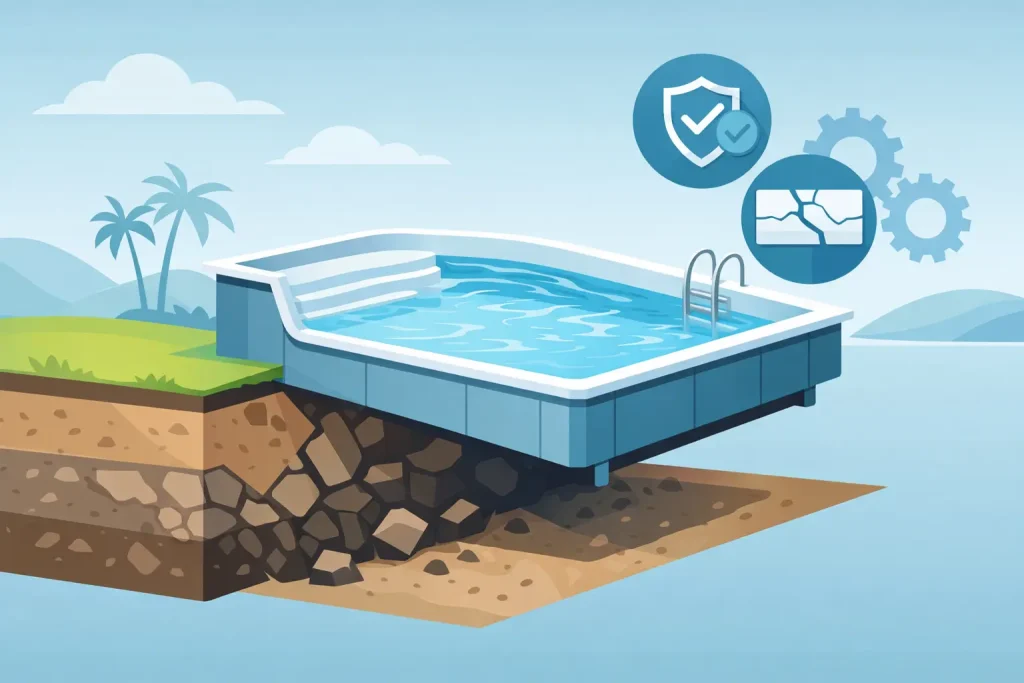
If you are weighing up pool options for your home, the question usually comes up quickly: are lightweight pools durable enough to last, or are they simply a faster, cheaper alternative to concrete? It is a fair concern, especially when you are investing in a permanent feature that needs to cope with Melbourne conditions, changing ground movement, and years of family use.
The short answer is yes, lightweight pools can be highly durable. But durability does not come from the word lightweight alone. It comes from the engineering behind the system, the quality of the materials, and the standard of installation. A well-designed lightweight pool is built to perform for the long term, not just to go in quickly.
Are lightweight pools durable in real-world conditions?
They can be, and in many cases they are a very practical long-term solution. Modern lightweight pool systems are a long way from basic prefabricated shells or temporary above-ground products that some people still picture. Today’s better systems use engineered panel construction, strong structural components, and pool-grade materials designed specifically for in-ground installation.
For many Victorian homes, that matters. Durability is not just about how tough a pool looks on day one. It is about how it responds over time to soil conditions, site access limitations, surrounding structures, and temperature changes. A pool that suits the site properly often performs better in the long run than a one-size-fits-all construction method.
That is one reason lightweight panel-built pools have become popular for sloping blocks, compact yards, and homes where access is limited. They are not a compromise by default. In the right setting, they are often the smarter structural choice.
What makes a lightweight pool durable?
The main factor is the construction system itself. High-quality lightweight pools are usually built using advanced polypropylene or similar engineered panel systems. These materials are chosen because they are stable, moisture-resistant, and capable of handling underground conditions without the same vulnerability to rust, rot, or surface breakdown seen in lower-grade alternatives.
The panel design also matters. A properly engineered modular system distributes loads effectively and can be reinforced to suit the site. That is especially useful where ground conditions are less straightforward or where a pool needs to be installed close to existing structures, retaining walls, or tight boundary lines.
Installation quality is equally important. Even the best pool material will underperform if the base preparation, backfilling, plumbing integration, or structural detailing is poor. Durability is always tied to workmanship. That is why builder experience matters so much with lightweight systems. The product and the construction process need to work together.
Lightweight pools versus concrete
Concrete has long been seen as the benchmark for pool durability, and in many applications it remains an excellent option. It offers design flexibility, substantial structural strength, and a premium custom finish. But that does not mean lightweight pools are inherently less durable. It means the two systems achieve durability in different ways.
Concrete relies on mass and reinforcement. Lightweight pools rely on engineered materials, structural design, and efficient load management. In difficult-access sites, for example, a lightweight system may actually reduce construction risk because it requires less excavation, less heavy equipment, and less disruption to surrounding areas.
There are also practical performance differences. Some lightweight pool systems provide better insulation than traditional construction methods, which can help with water temperature stability and potentially improve energy efficiency. That does not just affect running costs. It can also support more consistent material performance over time.
The key point is this: durability is not a single-material conversation. It is a design and installation conversation.
Where lightweight pools often perform best
Lightweight pools are particularly well suited to sites that place pressure on traditional construction methods. If access is narrow, the block is sloping, or excavation needs to be carefully managed around an existing home, a lighter structural system can make the entire project more manageable.
In many Melbourne suburbs, that is not a minor benefit. Established properties often come with tight side access, mature landscaping, neighbouring structures, or renovation constraints. A lightweight pool can allow a tailored design outcome without forcing the site into an unsuitable construction approach.
They also work well for plunge pools and compact pool designs, where efficient use of space matters just as much as long-term performance. A smaller footprint does not mean lower expectations. Homeowners still want durability, clean finishes, and a pool that feels like a permanent asset. A well-built lightweight system can deliver that.
Common concerns about durability
One concern people have is whether lighter materials are more likely to warp, crack, or shift over time. That risk depends heavily on the specific product and installation method. Low-grade systems can create problems, just as poor-quality concrete work can. The difference lies in engineering standards, not marketing labels.
Another concern is lifespan. A quality lightweight pool is designed for long-term use and should not be treated as a short-life alternative. However, expected life will always depend on maintenance, water chemistry, environmental conditions, and how well the system was built in the first place.
There is also the question of feel. Some homeowners assume that if a pool is not built from concrete, it must be less solid or premium. In practice, many are surprised by how substantial modern lightweight pool systems are once installed. The finished result can be sleek, durable, and visually aligned with high-end residential design.
Why the builder matters as much as the system
A lightweight pool is only as durable as the planning behind it. Soil conditions, drainage, engineering requirements, and site constraints all need to be considered early. That is where an experienced builder adds real value.
Good builders do not simply recommend lightweight construction because it is quick. They recommend it when it is the right fit for the property, the design goals, and the long-term outcome. That includes being upfront about where concrete may be the better choice and where a panel-built system offers clear advantages.
For homeowners, this is often the difference between a pool that looks good on paper and one that performs properly for years. Honest advice, proper site assessment, and consistent project management are part of durability too.
Maintenance and long-term performance
Like any in-ground pool, a lightweight pool still needs regular care. Water balance, filtration, cleaning, and equipment servicing all affect how well the pool performs over time. Durability is not just about the shell or structure. It also includes how the entire system is maintained.
That said, some lightweight systems offer practical advantages. Materials such as polypropylene are non-corrosive and do not rely on surface coatings in the same way some other pool types do. Depending on the finish and system selected, that can simplify certain aspects of long-term upkeep.
Homeowners should still ask the right questions before proceeding. What material is being used? How is the pool engineered for the site? What warranties apply? How is drainage managed? What is the expected maintenance requirement? Clear answers matter more than broad claims.
Are lightweight pools durable enough for Victorian homes?
For many properties across Victoria, yes. In fact, they can be one of the most sensible choices available. When designed properly and built with high-quality components, lightweight pools offer real structural integrity, excellent adaptability, and strong long-term value.
They are especially effective where access is difficult, where excavation needs to be minimised, or where the project calls for an efficient, modern construction method without sacrificing durability. That combination is exactly why more homeowners are considering them for both new builds and renovation projects.
At Eco Swim, we see this first-hand on sites where traditional methods are not always the most practical answer. Advanced lightweight pool technology gives homeowners more flexibility without asking them to settle for a lesser result.
If you are asking are lightweight pools durable, the better question may be whether the pool system is right for your site and built by a team that understands how to get the details right. When those pieces line up, lightweight does not mean less capable. It means better matched to the job.