 Skip to main content


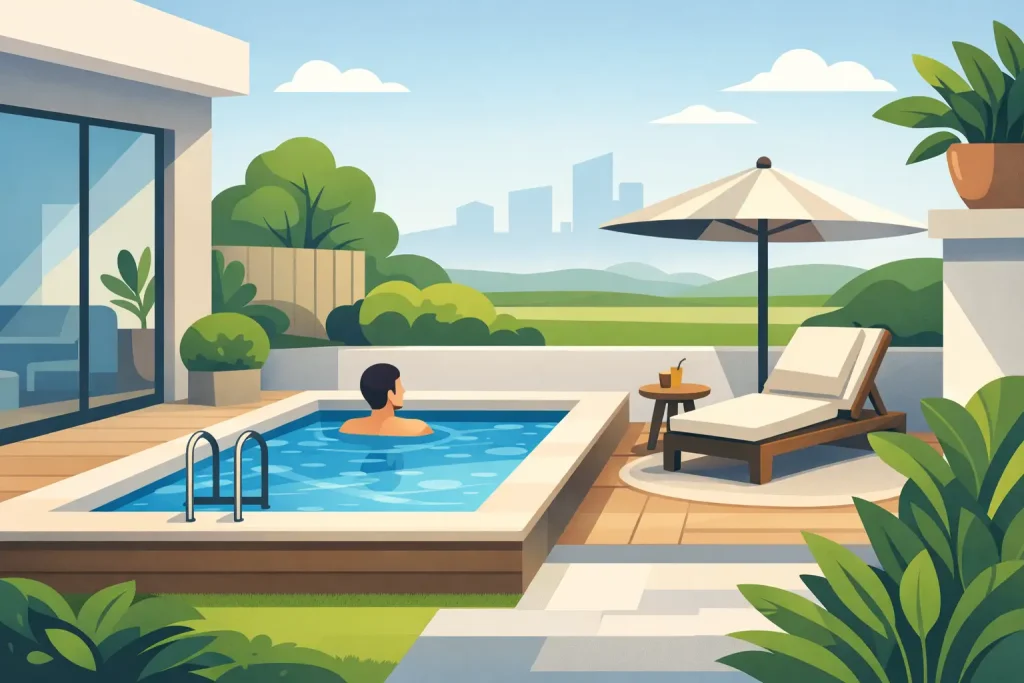
A full-size pool can quickly dominate a backyard. On many Melbourne blocks, that means giving up lawn, entertaining space, garden beds, or the simple ability to move around the yard comfortably. That is exactly why homeowners keep asking how plunge pools save space – not just on paper, but in a way that still feels practical, attractive and worth the investment.
The short answer is that a plunge pool gives you the experience of a pool without the footprint of a traditional design. The better answer is that space saving comes from several design decisions working together, from the pool’s dimensions and shape through to the way it is built and positioned on site. For smaller suburban blocks, courtyards, narrow lots and difficult-access properties, that difference can be significant.
How plunge pools save space in real backyards
A plunge pool is designed to deliver more function in a smaller area. Rather than stretching across the yard, it uses a compact footprint that leaves room for the rest of your outdoor area to keep working.
That matters because most homeowners are not trying to fit in a pool alone. They still want a dining zone, somewhere for the barbecue, space for kids to play, or a clean path between the house and the back fence. A well-designed plunge pool makes those things easier to keep.
This is where proportional design becomes important. A smaller pool does not simply mean shrinking everything down. It means choosing dimensions that suit the block and the way the space will be used. In many cases, a plunge pool can sit neatly along a boundary, into a courtyard corner, or beside an alfresco area without making the whole backyard feel cramped.
The visual effect also helps. When a pool is scaled to the site, the space around it feels more intentional. You avoid the common problem of a large pool forcing every other outdoor feature into narrow leftover areas.
Smaller footprint, better layout
One of the biggest reasons plunge pools work so well is that they improve overall layout efficiency. Instead of treating the pool as the centrepiece that claims most of the yard, the design can support a more balanced outdoor plan.
For example, on a compact block in Bayside or the South East, a traditional pool may leave only a thin strip of paving around the edge. That often limits furniture placement and makes the area feel tighter than it actually is. A plunge pool can free up enough room for a proper seating area, landscaping and circulation space, which usually makes the backyard more usable day to day.
This is especially valuable in renovation projects. Many existing homes were not originally planned around a pool, so the outdoor space has to work around fences, retaining walls, extensions, easements or sloping ground. A plunge pool gives far more flexibility when fitting into those existing constraints.
Why shape and placement matter
The question is not only how large the pool is. It is also where it sits and what shape it takes.
Rectangular plunge pools are popular because they use space efficiently and suit contemporary homes, but they are not the only option. In tighter settings, custom dimensions may be the difference between a pool that fits naturally and one that feels forced. A few hundred millimetres can change whether you retain enough room for a path, a deck or compliant clearance around the build.
Placement is equally important. Some of the most successful compact pool projects are positioned to one side of the yard rather than in the middle. Others are integrated with an alfresco zone so the pool reads as part of the entertaining area rather than a separate feature. On constrained sites, smart placement can also reduce excavation complexity and preserve more of the existing landscape.
That is one reason custom design matters. Space saving is rarely about selecting a standard small shell and dropping it wherever it fits. It is about designing a pool around the block, the home and the way the client wants to use the area.
How plunge pools save space during construction too
When people think about saving space, they usually focus on the finished pool. But construction method can also make a major difference, especially on sites with limited access.
Traditional building methods can require larger excavation zones, more machinery access and greater disruption across the property. On narrow blocks or established homes, that can create practical limits before the pool is even built.
This is where lightweight panel-built systems can offer a genuine advantage. Because they can reduce excavation demands and suit difficult-access sites, they open up possibilities that may be far harder with more conventional construction. For homeowners on compact inner-suburban blocks or properties where machinery access is restricted, that can be the key to making a pool feasible at all.
A lighter, more adaptable construction approach can also help when working around structural constraints, retaining conditions or tighter clearances. In other words, how plunge pools save space is not only about the water area. It is also about building smarter within the physical limits of the site.
They make small backyards feel bigger, not busier
There is a common concern that adding any pool to a smaller yard will make the space feel crowded. Sometimes that is true. Poor design can do exactly that.
A plunge pool tends to work better because it encourages a cleaner layout. Less surface area devoted to water means more room for open paving, planting and functional zones. That balance can make the yard feel calmer and better organised.
The effect is even stronger when the pool is paired with considered finishes. Light-coloured paving, built-in seating, simple planting and uncluttered edges all help a compact outdoor area feel more expansive. This is not about trying to disguise a small yard. It is about designing it well enough that every square metre serves a purpose.
For many households, that is far more valuable than installing the biggest possible pool and compromising everything around it.
A practical fit for modern Melbourne living
Backyards have changed. Across Melbourne and regional growth areas, many homeowners are working with smaller lots than they would have had a generation ago. At the same time, expectations around outdoor living have increased. People want a pool, but they also want entertaining space, low-maintenance landscaping and a backyard that still feels liveable through every season.
That is why plunge pools are such a practical fit. They suit the reality of modern block sizes while still delivering a premium outdoor feature. For families, they offer a place to cool off and relax without taking over the yard. For downsizers and renovators, they provide the appeal of a pool without the scale and disruption of a larger build. For commercial settings and boutique accommodation, they can add strong visual value in a confined area.
There are trade-offs, of course. A plunge pool is not designed for long lap swimming, and if your priority is maximum swim distance or large-group recreation, a larger pool may still be the better fit. But for many homes, the real goal is relaxation, visual appeal and everyday usability. In that context, smaller often makes better sense.
The space around the pool matters as much as the pool itself
One of the most overlooked parts of pool design is the surrounding zone. A pool does not exist in isolation. Its value depends on how well it works with paving, fencing, access points, seating, planting and the house itself.
A compact plunge pool usually leaves more room to design those elements properly. That means wider paths where needed, better furniture placement, and more opportunity to create distinct zones instead of one squeezed area. It can also improve sightlines from inside the home, which helps the backyard feel connected rather than cut up.
From a planning point of view, that flexibility can be very useful. Tight sites often involve a series of small decisions around compliance, access and spatial flow. A slightly smaller pool can create far better outcomes across the whole project.
At Eco Swim, this is often where tailored design and innovative pool construction make the biggest difference. The best result is not simply fitting a pool into the yard. It is creating a finished outdoor space that feels cohesive, practical and built for the way you live.
A smaller pool can be the smarter investment
Space saving also has a knock-on effect on cost, upkeep and long-term practicality. While every project is different, a plunge pool generally requires less water, less area to clean and often less ongoing maintenance than a larger pool. That does not make it the right choice for every property, but it can make ownership more manageable.
For homeowners weighing up whether a pool will take too much of the backyard, too much work or too much compromise, a plunge pool often changes the equation. It offers a way to enjoy the lifestyle benefits of a pool while keeping the outdoor area functional and easier to maintain.
If your block is compact, irregular, sloping or difficult to access, the question may not be whether you can fit a traditional pool. The better question is whether a plunge pool would give you a better result overall. In many cases, saving space is not about having less. It is about using the space you have with more care.