 Skip to main content


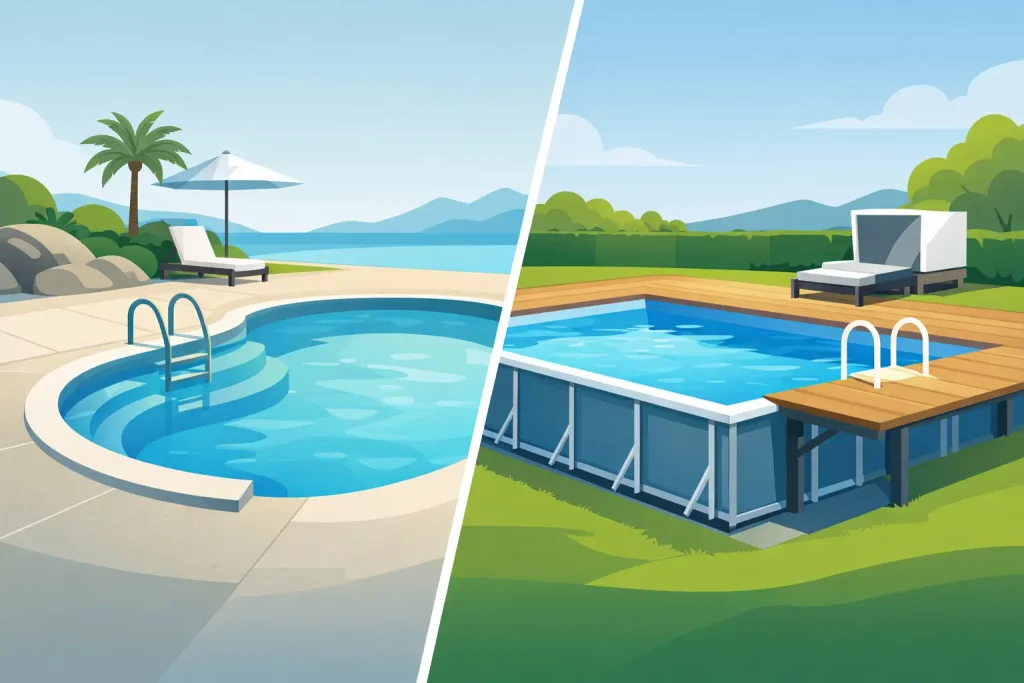
If you are weighing up a concrete pool vs panel pool, the right choice usually comes down to your site, your timeline and how custom you want the finished result to be. In Melbourne and across Victoria, those details matter more than most people expect. A pool that works beautifully on a flat, open block can become far more complex on a narrow site, a sloping backyard or a property with restricted access.
This is where the comparison needs to go beyond appearance alone. Both concrete and panel-built pools can deliver a premium result, but they solve different problems. Understanding those differences early can save time, reduce unnecessary cost and lead to a pool that genuinely fits the way you live.
Concrete pool vs panel pool: the core difference
A concrete pool is built as a fully engineered shell formed and constructed on site. It is the traditional choice for highly customised designs, unusual shapes and projects where every dimension is tailored from the ground up. For many homeowners, that flexibility is the biggest drawcard.
A panel pool uses a prefabricated or modular structural system, often made with advanced polypropylene panels, to create the pool shell. The structure is then assembled on site and finished to suit the design. This method offers a different kind of flexibility – not just in shape and size, but in how the pool can be installed on difficult sites and within tighter construction timeframes.
Neither option is automatically better. The better option is the one that suits the property, the brief and the practical realities of the build.
When concrete makes sense
Concrete remains a strong choice for projects where design freedom is the top priority. If you want a pool with fully custom curves, integrated features, unique depths or a shape designed around a very specific landscape plan, concrete gives a high level of control.
It also suits premium architectural builds where the pool is being treated as a one-off design element rather than a more standardised structure. In these cases, the longer construction process can be worthwhile because the final result is highly bespoke.
There is also a perception of permanence with concrete, and for some clients that matters. A well-built concrete pool is substantial and can be an excellent long-term asset when designed and constructed properly.
That said, concrete usually involves more excavation, more on-site labour and a longer build program. On a straightforward block this may be manageable. On a constrained site, it can add complexity quickly.
Where panel pools have a clear advantage
Panel pools are often the smarter solution when access is tight, the site is challenging or the client wants a faster installation without compromising on finish quality. That is especially relevant in established Melbourne suburbs, where many homes have narrow side access, existing landscaping, retaining walls or limited room for heavy machinery.
Because lightweight panel systems reduce the need for extensive excavation and are easier to transport into difficult areas, they can open up possibilities that a traditional concrete build may make more expensive or less practical. This is one of the main reasons panel construction has become increasingly popular for plunge pools, compact backyards and renovation projects.
Modern polypropylene panel systems also bring thermal benefits. Better insulation can assist with water temperature retention, which may support energy efficiency over time. For homeowners already thinking about running costs and eco-friendly pool systems, that can be a meaningful advantage.
The other major benefit is speed. While every project has its own approvals, engineering and finishing requirements, panel-built pools can generally move through construction more efficiently than full concrete builds. Less time on site often means less disruption around the home as well.
Design flexibility: more nuanced than people think
Many homeowners assume concrete wins easily on design and panel pools are limited to basic rectangles. That used to be a more accurate view than it is now.
Concrete still leads when a design is highly sculptural or completely unique. If the pool needs to follow unusual lines, integrate complex water features or respond to a very specific architectural concept, concrete has fewer constraints.
But modern panel systems are far from one-size-fits-all. They can accommodate a wide range of layouts, depths and sizes, and they work particularly well for contemporary designs that prioritise clean lines, efficient use of space and practical integration with outdoor living areas. For many residential projects, the available flexibility is more than enough.
The question is not whether a panel pool can be customised at all. It is whether your ideal design genuinely requires full concrete construction, or whether a panel-built solution can achieve the same visual outcome with fewer site complications.
Cost and value are not the same thing
When comparing a concrete pool vs panel pool, cost is always part of the conversation. But the cheaper headline figure does not tell the full story.
Concrete pools can carry a higher upfront cost due to labour, engineering, excavation and longer construction time. On complex sites, those costs can rise further. If your property has difficult access, unstable ground or structural considerations, the budget gap can become more noticeable.
Panel pools often provide better value where site efficiency matters. Reduced excavation, lighter materials and faster installation can help keep the project more controlled. That does not mean every panel pool is cheap – premium finishes, landscaping and integrated features still affect the final investment – but the construction method itself can remove some of the cost pressure.
Long-term value also depends on how well the pool suits the property. A pool that is easier to install, better insulated and more practical for the site may represent stronger value than a more expensive option chosen for tradition alone.
Build time and disruption on site
For many homeowners, the pool build happens while the house is fully occupied. That makes construction time more than a scheduling issue. It affects daily life.
Concrete pools generally take longer to build because the shell is formed and completed on site, with curing and sequencing requirements that cannot be rushed. There is also often more heavy site activity involved.
Panel pools typically allow for a more streamlined installation process. This can be particularly beneficial for busy families, renovation projects or homes where preserving existing access and landscaping matters. Less excavation and a lighter structural system can make the overall process feel more manageable.
This is one area where practical convenience often shifts the decision. A homeowner may start out focused on a dream design, then realise that a quicker, cleaner build is actually the better fit.
Durability and long-term performance
Durability should always be looked at through the lens of construction quality, not material alone. A well-designed and properly installed concrete pool can perform exceptionally well over the long term. The same is true for a high-quality panel system.
The difference lies in how the structure responds to the site and how well it has been engineered for that environment. Soil conditions, drainage, surrounding structures and installation standards all play a role.
Modern panel-built systems are designed to be strong, stable and suitable for a wide range of residential and commercial applications. In many cases, they also offer practical performance benefits through insulation and reduced structural load. Concrete, on the other hand, remains a dependable choice where a fully site-built shell is needed for design or engineering reasons.
This is why builder expertise matters so much. The best material on paper can underperform if it is not matched properly to the site.
Which pool is better for Melbourne homes?
For many Melbourne properties, especially those in built-up suburbs or on blocks with access limitations, panel pools make a compelling case. They suit smaller backyards, plunge pool installations and projects where clients want a premium finish with a more efficient build process.
Concrete is often better suited to larger custom projects where design freedom outweighs the added time and construction intensity. If the site is open and the brief is highly specific, concrete can be the right call.
In practice, the choice often comes down to this. If your priority is maximum customisation and you are comfortable with a longer, more involved build, concrete may suit you. If your priority is a smart, high-quality solution that handles site challenges well and keeps the project moving, a panel pool may be the stronger option.
An experienced builder should be able to assess both pathways honestly. At Eco Swim, that means looking at access, engineering, aesthetics, budget and long-term performance together, rather than pushing a single construction method regardless of the site.
The best pool is the one that fits your block and your brief
The concrete pool vs panel pool debate is really about choosing the right construction method for the outcome you want. Some projects need the freedom of concrete. Others are far better served by a lightweight panel system that saves time, reduces disruption and works with the realities of the site.
If you are planning a new pool, the most useful starting point is not asking which type is best in general. It is asking which type makes the most sense for your home, your layout and the way you want the project to run. Get that part right, and the rest of the decisions become much clearer.