 Skip to main content


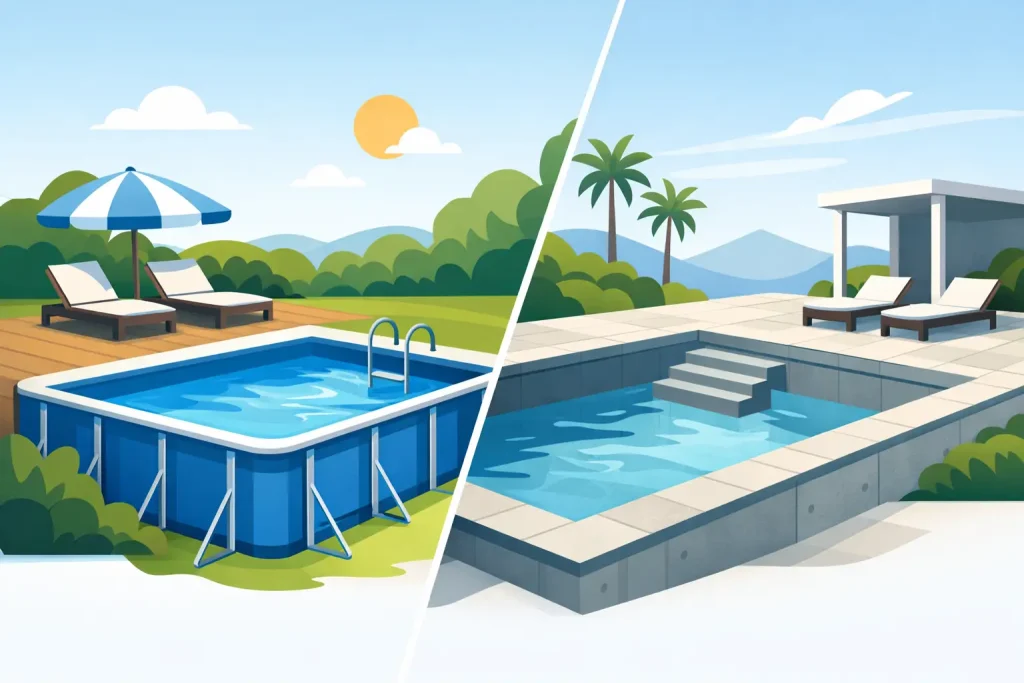
If your block has tight access, a slope, or not much room to move between the house and the fence line, the usual pool conversation changes quickly. That is where panel pools vs concrete becomes a practical decision, not just a design preference. For Melbourne homeowners, the right option often comes down to site conditions, installation method, budget priorities and how custom you want the final result to be.
Both pool types can deliver a high-quality finish and years of reliable use. The difference is in how they are built, how flexible they are on difficult sites, and what trade-offs come with each approach. A good builder should explain those trade-offs clearly so you can make the right call for your property, not just choose the method they happen to prefer.
Panel pools vs concrete: the core difference
A concrete pool is built in place. It is usually excavated, reinforced with steel and then sprayed or poured with concrete to create a fully custom shell. This method has been the benchmark for bespoke pool construction for a long time because it allows almost complete freedom in shape, depth and finish.
A panel pool uses a pre-engineered structural system, often made from advanced polypropylene or similar lightweight materials, with the shell assembled on site. It is not a one-size-fits-all product. Modern panel-built systems can still be customised, but they are designed to simplify construction, reduce installation complexity and perform well on sites where a traditional concrete build can become expensive or difficult.
That distinction matters because not every pool project starts with a blank, easy-access backyard. In many parts of Melbourne and regional Victoria, homeowners are building around existing homes, landscaping, retaining walls, easements and narrow side access. In those situations, construction method matters just as much as the finished look.
Where concrete still leads
Concrete remains the strongest choice when design freedom is the priority. If you want a highly detailed shape, unusual dimensions, an integrated spa, complex edge treatments or a completely bespoke architectural outcome, concrete gives you the most flexibility. It suits premium custom projects where the pool is being designed as a centrepiece and the site allows for a more involved build.
It is also a familiar option for many homeowners because concrete has a long track record. People understand it, designers work with it confidently, and it can be tailored to suit everything from formal lap pools to luxury resort-style installations.
That said, custom freedom usually comes with a higher level of construction intensity. Concrete builds often involve more excavation, more structural work and longer installation timeframes. On a generous site, that may be perfectly manageable. On a constrained suburban block, it can affect cost, access logistics and disruption to the rest of the property.
Where panel pools have a clear advantage
Panel-built pools make a lot of sense when the site is challenging or the installation window matters. Their lightweight construction can reduce the need for heavy excavation and make transport and assembly easier where access is limited. If you have a narrow block, an established home, or a backyard that is difficult to reach with large machinery, that can be a major advantage.
For smaller backyards and plunge pool projects, panel systems are especially appealing. They can deliver a clean, modern result without forcing a full-scale construction process into a space that simply does not suit it. For many homeowners, that means less disruption and a more straightforward build.
There is also an efficiency benefit. Lightweight panel systems are typically faster to install than traditional concrete shells, which can help reduce the overall project timeline. That does not mean every project is fast or simple, because approvals, engineering, landscaping and finishing work still need to be managed properly. But the shell construction itself is often quicker.
Design flexibility: not all customisation is equal
One of the biggest myths in this comparison is that panel pools are generic while concrete pools are custom. The reality is more nuanced.
Concrete offers near-total design freedom, so if your brief is highly specific, it is usually the better fit. But modern panel systems are far more adaptable than many people expect. They can be configured to suit a range of sizes, depths and site layouts, and they work particularly well for contemporary rectangular pools and plunge pools.
So the real question is not whether a panel pool can be customised. It is whether it can be customised enough for your goals. If you want a sleek, practical pool that suits the home and maximises the available space, a panel-built system may give you everything you need. If your vision depends on complex curves or a very specific architectural form, concrete may justify the extra time and cost.
Site access changes everything
For many Melbourne properties, site access is the deciding factor.
A concrete build often relies on larger equipment, more materials moving through the site and a more labour-intensive shell construction process. If access is easy, that is less of an issue. If the only way into the backyard is through a narrow side passage, over a garage, or past existing structures you want to protect, costs can climb quickly.
This is where lightweight panel systems stand out. Because the components are easier to transport and handle, they are often better suited to difficult-access blocks, inner suburban homes and properties with structural constraints. That can open up pool options for homeowners who assumed their site was too hard or too expensive to work with.
For an experienced builder, this is not just about convenience. It is about giving you a viable construction path that suits the property rather than forcing the property to suit the construction method.
Cost: look past the starting figure
Homeowners often ask which option is cheaper. The honest answer is that it depends on the project.
Concrete can become more expensive because it is more labour intensive and often involves longer construction timeframes. On a straightforward site, the difference may be manageable if full customisation is worth it to you. On a difficult site, the gap can widen once excavation, access work and structural requirements are factored in.
Panel pools are often more cost-effective where installation efficiency and reduced site complexity make a real difference. But it is important not to compare only the shell price. You also need to consider excavation, engineering, approvals, coping, paving, filtration, heating and landscaping. A cheaper shell does not always mean a cheaper finished pool, and a more expensive shell may still offer better overall value if it suits your site and reduces complications.
The right builder should walk you through total project cost, not just headline numbers.
Durability and long-term performance
Concrete has a well-earned reputation for strength and longevity when designed and built properly. That is one reason it remains popular for high-end custom projects and certain commercial applications.
Panel-built pools also offer strong structural performance, especially when using advanced engineered systems. Quality matters here. A well-designed polypropylene panel system can provide excellent insulation, resist corrosion and perform reliably over time. Those insulation properties can also support better energy efficiency, which is worth considering if you plan to heat the pool.
As with any pool, durability depends on design, engineering, workmanship and aftercare. The construction method matters, but so does the builder’s experience and the quality of the system being installed.
Sustainability and efficiency
For homeowners looking at the environmental side of their project, panel pools often have a stronger practical case. Lightweight recyclable materials, reduced excavation requirements and improved insulation can all contribute to a more efficient build and lower ongoing energy demand.
Concrete can still be part of a high-quality, energy-efficient pool project, especially when paired with the right equipment and smart design choices. But if reducing material intensity and improving thermal performance are priorities, lightweight panel systems have a clear edge.
That is one reason more homeowners are considering them as a modern alternative rather than a compromise option.
Which pool is right for your property?
If your priority is complete design freedom and your site can comfortably accommodate a traditional build, concrete may be the right fit. It remains an excellent option for custom pool design, especially where architectural detail is central to the brief.
If your site is tight, access is limited, the backyard is compact or you want a faster and more efficient installation, a panel-built pool may be the smarter solution. That is particularly true for plunge pools, space-conscious designs and properties where a heavyweight construction method creates unnecessary complexity.
For many Victorian homeowners, the choice is not about which method is better in general. It is about which method is better for this block, this home and this budget. That is the approach Eco Swim takes because a pool should solve site constraints, not add to them.
The best starting point is not choosing a material. It is understanding your site properly, being clear about how you want to use the pool, and getting advice from a builder who can offer both custom thinking and practical solutions. Once those pieces are clear, the right option usually becomes a lot easier to see.