 Skip to main content


A well-built concrete pool does not start with concrete. It starts with the block, the access, the engineering and a clear plan for how the pool will be used. When clients ask how concrete pools are built, they are often really asking two things at once – what happens on site, and what should they expect before construction even begins.
For Melbourne and Victorian properties, that early planning matters. Soil conditions, sloping land, tight suburban access, council requirements and adjoining structures can all affect the method, cost and timeline. Concrete remains one of the most flexible ways to build a custom pool, but the best result comes from getting each stage right rather than rushing to the shell.
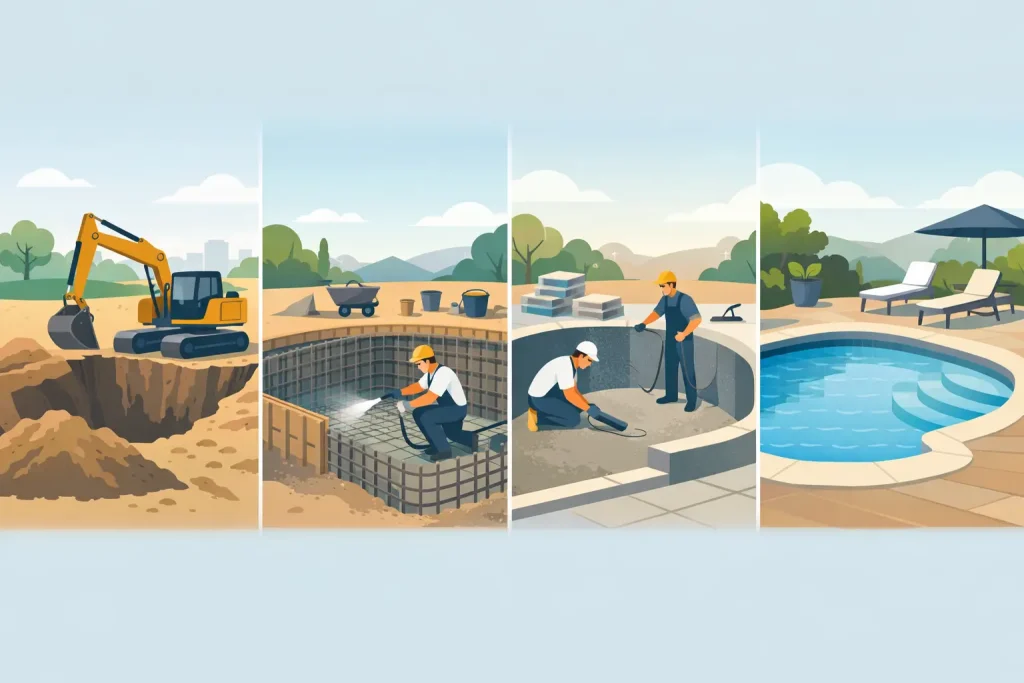
How concrete pools are built from the ground up
Concrete pool construction usually follows a set sequence, but the detail within each stage can vary depending on the site and design. A compact plunge pool in an inner-suburban backyard is a different exercise from a large family pool on a coastal block or a commercial installation with specific compliance requirements.
The process generally begins with consultation and design. This is where pool size, depth, shape, entry points, interior finish, plant equipment and surrounding landscaping are considered together. Good builders also assess practical constraints early, such as machine access, retaining requirements, easements and how spoil will be removed from site.
Once the design is resolved, the project moves into approvals and engineering. In Victoria, this can involve council requirements, building permits and structural documentation. This stage is less visible than excavation, but it is one of the most important parts of the job because it confirms that the pool is suitable for the site conditions and compliant with local requirements.
Site set-out and excavation
After approvals are in place, the pool area is set out on site. This gives everyone a final check on position, orientation and levels before digging starts. It is the point where dimensions on paper become something tangible in the backyard.
Excavation follows. Machinery removes soil to the shape and depth required for the pool shell, with additional allowance for structural elements. On a straightforward site, this stage can move quickly. On more difficult blocks, excavation may be affected by rock, high water tables, narrow side access or the need to protect nearby structures.
Excavation is also where a lot of hidden site conditions reveal themselves. That is why experienced builders never treat early estimates as a simple square-metre exercise. The same pool design can require a very different construction approach depending on what is under the ground and how easy it is to reach the site.
Steel reinforcement and structural preparation
Once the hole is excavated and trimmed, the shell is prepared for reinforcing steel. This steel framework gives the concrete pool its structural strength. It is shaped to suit the exact design, including walls, floor, steps, benches and any special features.
At this stage, the builder also allows for penetrations and fixtures. Suction points, returns, lights, skimmer boxes and hydrostatic relief provisions need to be planned before concrete is applied. If heating, water features or in-floor cleaning systems are part of the design, those elements are coordinated now as well.
This is one of the reasons concrete is so popular for custom pool projects. It allows far more design freedom than many pre-formed systems. Curves, negative edges, integrated spas and unusual depths are all possible, but they still need disciplined engineering and careful site execution.
Plumbing and electrical rough-in
Before the shell is sprayed or poured, the rough-in for plumbing is completed. Pipes are installed to connect the pool to its filtration and circulation systems, with consideration for hydraulic efficiency and future serviceability. A quality pool build is not just about how the shell looks on handover day. It is also about how well the system performs over time.
Electrical rough-in is coordinated in parallel, particularly for pool lighting, pumps, chlorination systems, automation and heating. These services need to be planned around both compliance and convenience. Plant location, noise, access for maintenance and visual impact all matter, especially on residential sites where equipment areas can be tight.
Sprayed concrete or formed concrete shell
The shell itself is then constructed using concrete, often through a sprayed application such as shotcrete. In this method, concrete is pneumatically applied over the reinforced steel to create the structural shell. The material is compacted during application, which helps achieve strength and continuity across the structure.
Some projects may use different concrete methods depending on engineering requirements and builder preference, but the core principle is the same. The shell must be structurally sound, correctly shaped and properly cured.
After application, the concrete enters a curing period. This step is essential and should never be treated as dead time. Proper curing helps the shell reach its intended strength and reduces the risk of cracking from poor moisture control. Timeframes vary depending on weather and project conditions, but patience here protects the long-term durability of the pool.
Waterproofing, coping and interior finish
Once the shell has cured and passed the necessary checks, the project moves into finishing stages. The interior surface may be rendered and coated, tiled, or finished with pebble or quartz products depending on the selected specification. Each finish creates a different visual effect, texture and maintenance profile.
Coping and edge detailing are also installed at this point. These elements do more than frame the pool visually. They help manage water movement, define the transition to paving or decking, and contribute to the safety and comfort of the pool edge.
The right finish is not only a design decision. It should suit how the pool will be used, the desired water colour, the surrounding architecture and the level of maintenance the owner is comfortable with. A premium tiled finish can look exceptional, but it involves a different budget and installation process than a pebble interior.
Equipment installation and commissioning
With the shell and finishes complete, the filtration system, sanitisation equipment, pumps, heating and controls are installed and connected. This is where the pool begins to operate as a system rather than just a structure.
Modern concrete pools can be paired with highly efficient equipment, including variable-speed pumps, automated chlorination and energy-conscious heating options. For many clients, this is where eco-friendly performance becomes a practical benefit rather than a marketing phrase. Lower energy use, smarter water management and better insulation strategies can all improve the ownership experience.
The pool is then filled, balanced and commissioned. Water chemistry is adjusted, equipment is tested and the owner is guided through operation and maintenance. A trusted builder will make this handover clear and manageable, not rushed or overly technical.
What affects the timeline
A common question after how concrete pools are built is how long it all takes. The honest answer is that it depends on approvals, weather, site complexity, material selections and the coordination of trades.
A relatively straightforward project may progress smoothly, while a sloping site with structural retaining, restricted access or custom finishes will take longer. Council and permit timeframes can also extend the lead-up before physical works begin. This is normal, particularly for tailored pool construction rather than off-the-shelf installation.
What matters most is having a builder who explains the sequence clearly, communicates changes early and manages the whole process with realistic expectations.
Why site conditions matter so much in Victoria
Victorian sites can be deceptively varied. A pool build in Bayside may involve sandy conditions and coastal influences, while a project in the eastern suburbs may deal with slope, drainage and tighter rear access. On the Mornington Peninsula or in Geelong, wind exposure, soil movement and site logistics can all shape the build methodology.
That is why there is no single answer to how concrete pools are built on every property. The structural principles stay consistent, but the right construction approach depends on the block. In some cases, traditional concrete construction is the best fit. In others, particularly where access is difficult or excavation needs to be reduced, alternative systems such as lightweight panel-built pools may offer clear advantages. That kind of honest guidance is part of quality project planning.
For homeowners comparing options, the best starting point is not just choosing a pool shape. It is choosing a builder who understands local conditions, manages the process properly and can recommend the right construction method for the site rather than forcing every project into the same mould. If you begin there, the rest of the journey is far more straightforward.