 Skip to main content


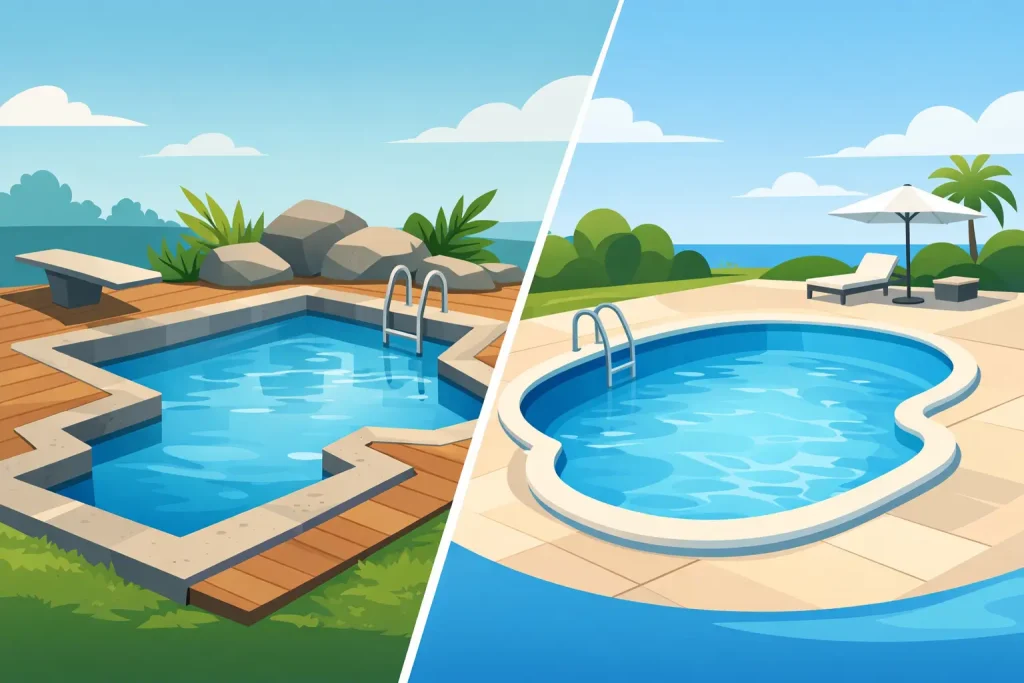
If you are weighing up concrete pools vs fibreglass pools, the right choice usually comes down to your block, your design goals and how much flexibility you want during the build. In Melbourne, that decision also needs to account for access, soil conditions, council requirements and how the pool will sit within the rest of your outdoor space.
A pool is not a small purchase, and the material you choose shapes more than the look. It affects installation time, long-term maintenance, design freedom and how well the pool suits a difficult site. That is why the best outcome is rarely about picking the cheapest option on paper. It is about choosing the construction method that matches the property and the way you want to use the pool.
Concrete pools vs fibreglass pools: what is the difference?
The biggest difference is how the pool is made and installed. A fibreglass pool is manufactured off-site as a pre-formed shell, then transported to the property and lowered into an excavated hole. A concrete pool is built on-site, which allows the structure to be shaped around the space, engineering requirements and design brief.
That distinction matters. Fibreglass offers speed and simplicity where access is straightforward and one of the available shell sizes suits the site. Concrete offers far more freedom, which is why it is often preferred for custom homes, challenging blocks, compact courtyards and high-end outdoor projects where the pool needs to work precisely with the landscape and architecture.
Design flexibility matters more than most people expect
For many homeowners, design starts as a rough idea – perhaps a lap pool along a boundary, a plunge pool for a smaller backyard, or a pool integrated with decking, retaining walls or a sloping site. This is where the gap between concrete and fibreglass becomes clear.
Concrete pools can be designed to suit almost any shape, size or depth profile. If your backyard has limited access, irregular boundaries or existing structures that need to be worked around, a custom-built concrete pool gives far more room to solve those constraints. It also allows for features such as beach entries, infinity edges, custom steps, integrated spas and tailored seating zones.
Fibreglass pools are more limited because you are selecting from existing moulds. There are quality fibreglass options on the market, but you are still choosing within a fixed range. If the shell dimensions do not fit your site well, compromises often follow. That may mean losing usable yard space, adjusting landscaping plans or settling for a layout that is close enough rather than right.
For homeowners who want a pool to feel fully integrated with the home, concrete usually offers the stronger design outcome.
Installation time and site access
Fibreglass is often promoted on speed, and in the right conditions that is fair. Because the shell arrives pre-manufactured, installation can be quicker than a traditional concrete build. If access is open, the site is simple and the shell size works, fibreglass can be an efficient option.
The problem is that many Melbourne sites are not simple. Narrow access, overhead wires, tight suburban blocks, sloping land and renovation constraints can all affect whether a large pre-formed shell can even reach the backyard. In established suburbs across Bayside, the eastern suburbs and the Mornington Peninsula, access can be one of the biggest deciding factors.
Concrete has an advantage here because it is constructed on-site. You are not relying on transporting a one-piece shell through a tight property. That flexibility can make a major difference on difficult-access sites.
It is also worth noting that modern alternatives to traditional concrete construction now exist. Lightweight panel-built systems can deliver many of the design and access benefits associated with custom construction, while reducing excavation, improving insulation and speeding up installation. For some properties, that creates a practical middle ground between standard fibreglass convenience and full custom concrete capability.
Upfront cost versus long-term value
Cost is where many comparisons begin, but it should not be where they end. Fibreglass pools often have a lower upfront price than a fully custom concrete pool, particularly when the site is straightforward and there is minimal need for engineering complexity or design variation.
Concrete usually costs more at the start because the pool is individually designed and built. The construction process is more involved, and the scope can be tailored in far more detail. For homeowners focused only on initial spend, fibreglass may look more attractive.
But value is not just the contract price. A pool that fits the site properly, complements the home and avoids design compromises may add more practical and visual value over time. If a fibreglass shell forces layout changes, additional site works or compromises in how the space functions, the savings can narrow quickly.
In premium residential projects and architecturally driven builds, concrete is often seen as the better long-term investment because it supports a more considered overall result.
Concrete pools vs fibreglass pools for maintenance and durability
Maintenance is one of the most common talking points in the concrete pools vs fibreglass pools discussion. Fibreglass is generally regarded as the lower-maintenance option in terms of surface care. Its smooth gelcoat finish tends to resist algae more effectively, which can make cleaning easier.
Concrete pools require more attention to water balance and surface care over time. Depending on the interior finish selected, they may need resurfacing in the future. That does not make concrete a poor choice, but it does mean owners should go in with realistic expectations about upkeep.
Durability, however, is more nuanced than maintenance. Concrete is structurally strong and well suited to custom engineering. It can be designed for complex conditions and heavy-use applications, including many commercial settings. Fibreglass is also durable when manufactured and installed correctly, but it remains a factory-formed shell with size and structural limitations.
So the better question is not simply which pool is easier to clean. It is which construction method is better suited to the site, intended use and expected lifespan of the project.
Aesthetics and finish quality
If visual impact matters, concrete has the edge. It offers more control over shape, edge detailing, coping selection and interior finishes. That flexibility is valuable when the pool is a central feature of the landscape rather than a standalone insert.
Fibreglass pools can still look excellent, especially in clean, contemporary settings, but the finish options are more standardised. For some homeowners, that consistency is a benefit. For others, it feels restrictive.
In higher-end projects, subtle details often make the difference. The way the pool aligns with paving, outdoor entertaining zones, garden design and the home itself is easier to refine with a custom-built structure.
Which option suits Melbourne homes best?
There is no single answer, because Melbourne properties vary widely. On a clear, accessible block where a standard shell size fits neatly, fibreglass can be a sensible choice. It offers a faster path to installation and can work well for homeowners who want a practical family pool without extensive customisation.
Concrete is usually better suited to sites with complexity. If the block is tight, sloping or hard to access, or if the design needs to be tailored around the house and landscaping, custom construction makes more sense. It is also the stronger option when the pool is expected to deliver a premium architectural outcome.
This is where experienced guidance matters. A good builder should not push one material in every situation. They should assess the site, explain the trade-offs clearly and recommend the method that fits the property, budget and brief.
At Eco Swim, that conversation often includes not only concrete and fibreglass, but also advanced lightweight pool systems that solve access and installation challenges without forcing a one-size-fits-all design.
How to choose without second-guessing the decision
Start with the site, not the brochure. Access, available space, soil conditions and the relationship between the pool and the home should all be assessed early. From there, think about what matters most to you. If speed and a lower-maintenance surface are top priorities, fibreglass may suit. If custom design, difficult access or a tailored finish are more important, concrete is likely the better fit.
It also helps to think beyond the pool itself. The best projects treat the pool as part of a wider outdoor plan, not a separate item dropped into the yard. When that bigger picture is considered from the beginning, the right construction method usually becomes much clearer.
The smartest pool decisions are rarely about following a trend. They come from choosing the option that works properly for your home, your site and the way you want to live in the space for years to come.