 Skip to main content


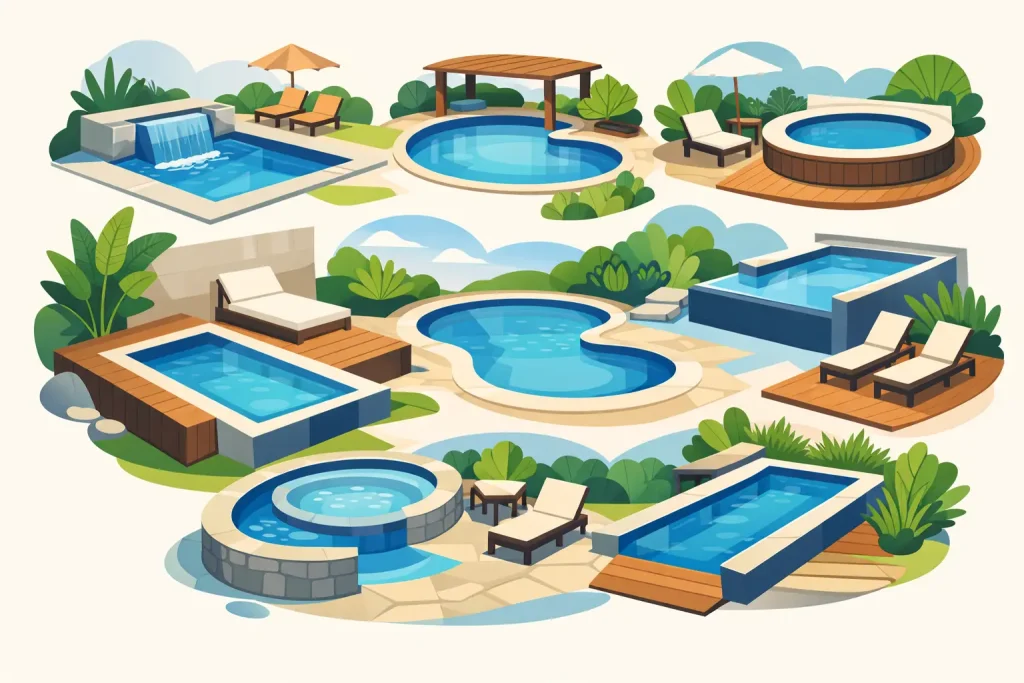
A narrow block, tight side access, or a backyard that already works hard for entertaining can make a pool feel out of reach. In practice, the best pools for small backyards are rarely the biggest or most elaborate. They are the ones designed around how the space is used, how the site can be built on, and how much maintenance and running cost the owner is comfortable with.
For many Melbourne homeowners, that means looking beyond the old idea that a pool has to dominate the yard. A well-designed small pool can still deliver a strong visual impact, a place to cool off in summer, and a genuine lift in day-to-day liveability. The right choice depends on your block, your budget, and whether your priority is exercise, family use, entertaining, or creating a compact outdoor retreat.
What makes the best pools for small backyards?
Small backyards need efficient design. Every square metre matters, so the pool has to earn its footprint. That usually means choosing a shape and construction method that preserves usable space around it rather than consuming the whole yard.
Depth, internal seating, entry steps, filtration location, and fencing layout all affect how spacious the area feels once the pool is installed. This is where careful planning matters more than raw pool size. A compact pool with clean lines and a practical layout can feel generous, while a poorly planned larger pool can make the entire backyard feel cramped.
Construction also matters. On many Melbourne sites, especially in established suburbs, access constraints can be just as important as the backyard size itself. If getting machinery into the yard is difficult, or excavation has to be limited, lightweight panel-built systems can open up options that traditional methods may make more complex or costly.
1. Plunge pools
Plunge pools are often the first and strongest contender for small yards. They are compact by design, easy to integrate into modern landscaping, and well suited to homeowners who want a place to cool off, relax, and entertain without giving over the entire backyard.
A plunge pool works especially well when the brief is lifestyle rather than laps. Built-in bench seating, heating, and water features can turn a smaller footprint into a premium outdoor space that gets used for more months of the year. For families with young children, a plunge pool can also be a practical way to enjoy water play without committing to a full-sized pool.
The trade-off is straightforward. If regular fitness swimming is a priority, a plunge pool may feel limiting unless it includes swim jets. But for many properties, especially in Bayside, the inner east, and other space-conscious Melbourne suburbs, a plunge pool offers the best balance of usability and footprint.
2. Narrow lap-style pools
If your block is long but not particularly wide, a narrow lap-style pool can be one of the smartest layouts available. These pools run neatly along a boundary or fence line and leave more open area for paving, lawn, or an alfresco zone.
This style suits homeowners who want a pool that looks refined and serves a practical purpose. Even a relatively narrow pool can support exercise, cooling off, and family use when the length is handled well. Visually, it also creates a strong architectural line that can make a compact backyard feel more organised.
The catch is that long, narrow pools need careful detailing. Entry steps, filtration equipment placement, and fencing should be planned early so the design does not eat into already limited width. On tight blocks, custom sizing is often the difference between a pool that feels integrated and one that feels forced.
3. Courtyard pools
Some of the best pools for small backyards are not in traditional backyards at all. Courtyard pools suit homes where outdoor space is broken into smaller zones or where the pool is intended to sit close to the house as part of a wider renovation.
These pools are ideal for compact urban lots and high-value spaces where appearance matters as much as function. A well-designed courtyard pool can become the centrepiece of the home’s outdoor area, particularly when paired with quality paving, built-in seating, and strong lighting design.
Because courtyard spaces are tighter, access and construction method become even more important. This is where modern lightweight systems can offer a genuine advantage. Reduced excavation, improved access flexibility, and faster installation can make a courtyard pool more achievable on constrained sites.
4. Small rectangular concrete pools
Concrete remains a strong option for homeowners who want full design freedom. In a small backyard, that can be valuable. A custom concrete pool can be shaped precisely to suit setbacks, landscaping, entertaining zones, and architectural lines.
Rectangular concrete pools are particularly effective in compact spaces because they keep the layout clean and efficient. There is no wasted geometry, and the form works well with contemporary homes. If you want integrated seating, custom step placement, or premium interior finishes, concrete gives you room to tailor the final result.
The main consideration is build complexity. Concrete pools can require more time on site and may be less forgiving on difficult-access blocks, depending on the project. They are an excellent solution when customisation is the top priority, but they are not always the most efficient answer for every small site.
5. Lightweight panel-built pools
For many Victorian properties, lightweight panel-built pools deserve serious attention. They are one of the most practical options for smaller backyards where access is tight, excavation needs to be managed carefully, or the site presents structural limitations.
Advanced polypropylene panel systems offer strong insulation performance, fast installation, and flexibility in design. They are also well suited to modern pool projects where homeowners want a quality outcome without some of the disruption associated with heavier traditional construction.
This approach can be especially useful on sloping blocks, homes with restricted access down the side, or properties where preserving existing structures and landscaping matters. A smaller backyard does not always mean the pool itself has to be basic. In many cases, lightweight construction makes a more tailored and premium design possible because it broadens what can realistically be built on site.
6. Corner pools
A corner pool can be a clever way to reclaim underused space. Rather than placing the pool in the middle of the yard, this layout uses the edge of the site to preserve open area for entertaining or family use.
Done well, a corner installation can make a backyard feel larger because it avoids chopping the space into awkward pieces. It is particularly effective when paired with simple landscaping and a consistent material palette that ties the pool area into the rest of the yard.
The design needs discipline, though. In a small space, angles, steps, and surrounding hardscape can quickly make things feel crowded. Corner pools work best when the lines are clean and the surrounding area is kept purposeful.
7. Spa-pool combinations
For some homeowners, the best answer is not a conventional pool at all. A compact spa-pool combination can deliver the cooling and visual appeal of a small pool with the comfort and year-round use of a heated spa zone.
This is often a strong fit for couples, downsizers, or renovation-focused homeowners who want a premium outdoor feature rather than a large family swim space. It can also make sense where land is limited and the goal is to create a high-end retreat rather than maximise swimmer capacity.
The trade-off is capacity. These designs are excellent for relaxation and short soaks, but they will not replace the functionality of a larger family pool. That said, they can be one of the most satisfying choices for compact properties when the brief is quality over size.
How to choose the right pool for your block
The best pool type starts with the site, not the brochure. Block dimensions, access, slope, overlooking, existing structures, and council requirements all shape what is practical. This is why smaller backyards benefit from early advice. A few design decisions made at the start can protect usable space, reduce construction headaches, and improve long-term enjoyment.
It also helps to be honest about how the pool will be used. If the goal is family play and entertaining, a plunge pool or compact rectangular pool may be ideal. If exercise is important, a narrow lap-style design could be the better fit. If access is difficult, lightweight construction may move to the top of the list very quickly.
Running costs and maintenance should be part of the conversation as well. Smaller pools are generally more efficient to heat, clean, and maintain, which is one reason they appeal to busy homeowners. Add an eco-friendly system and the pool becomes easier to manage over time without compromising on comfort.
A small backyard does not call for compromise as much as it calls for precision. The pool needs to suit the way the home is lived in, the realities of the site, and the standard you expect from the finished space. With the right design and build method, even a compact block can support a pool that feels considered, durable, and genuinely worth it. If you are planning one, start with what your site can do well and build from there.